Categories
 Accessoires & Beaux Arts
 Beaux Arts
 Bureautique
 Outils d'écritures
 Papeterie
MEILLEURES VENTES
-
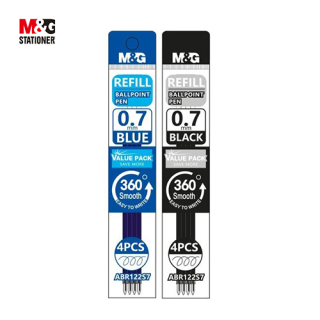 Recharge Stylo Coopen 0.7
Ar 860
-
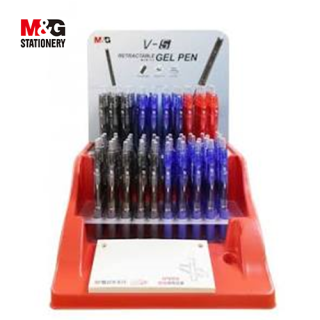 Stylo gel tricolore 0,5
Ar 184,490
-
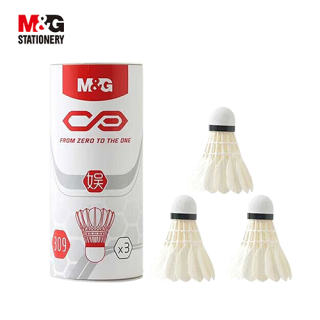 Balle Badminton (lot de 3)
Ar 39,350
-
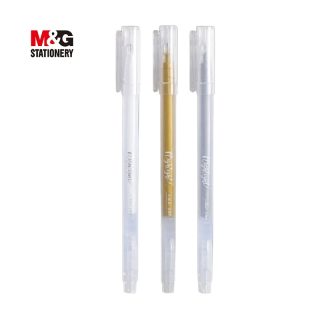 Stylo Gel 0.6mm 3 couleurs
Ar 6,830
-
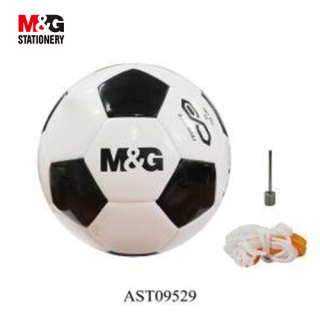 Ballon de football TPU n° 5 Classique
Ar 46,940
A slot with 97% RTP sounds like the smartest bet on the page, until a $40 bankroll is gone in eleven minutes. That gap between the advertised return and the actual ride is where most small-budget players lose their money, and it has nothing to do with picking a bad casino. RTP is a long-run average measured over millions of spins. Volatility is what decides whether your balance survives the next hundred. Anyone comparing Jackpot City sister sites or other online casino Canada options for a modest first deposit needs both numbers, not just the prettier one.
This guide is about the mistakes, because they repeat in a predictable order. A player reads a casino review, sees a 96%+ figure, skips the game info screen, stakes $2 a spin on a 30,000x max-win title, and hits zero before the welcome offer has even cleared its wagering. The fix is not a secret slot or a bigger deposit. It is treating RTP and volatility as two separate filters and matching both to the size of your balance, then choosing a gambling site whose slot library actually labels the second one.
Expect concrete numbers rather than theory: how a 0.5% to 1% bet-to-bankroll ratio behaves on low versus high volatility, why a 100 bonus spins offer on a $20 minimum deposit can stretch further than a larger deposit bonus played at the wrong stake, and which details on a casino comparison table matter when your budget is small. We will also look at how Jackpot City alternatives and sister casinos stack up on slot filters, minimum deposits and responsible-gambling tools, since a generous headline offer means little if the lobby pushes you straight into the most brutal games. Read the next few sections before you deposit, and the same $40 can last an evening instead of a coffee break.
Why RTP Alone Is a Misleading Shortcut for Small Bankrolls
RTP, or return to player, is the percentage of all money wagered on a slot that the game pays back over the long run. A 96% RTP slot keeps about $4 of every $100 wagered and returns $96 in prizes. That number is real, but it describes an average across millions of spins, not your $30 deposit on a Tuesday night. Players on a small budget often treat the highest RTP as the safe pick and skip the other half of the equation entirely.
Volatility is that other half. It describes how the payouts are spread out: how often you win, how big the wins are, and how long you can go without one. Two slots can both sit at 96% RTP and behave like completely different games. One pays small amounts constantly; the other pays almost nothing for 200 spins and then drops a 500x win. Over a year of play the return evens out. Over one short session with a small balance, the difference decides whether you play for an hour or lose everything in six minutes.
What a Single RTP Percentage Hides
The RTP figure is calculated over a sample so large that no individual player will ever get near it. That is why a 97% game can still eat a $20 balance in a handful of spins. The percentage says nothing about the order the wins arrive in, and order is everything when your bankroll is thin.
A quick example shows the gap. Put $20 into a low-volatility slot at 96% RTP with a 50 cent bet and you will likely see frequent small returns; the balance drifts down slowly and you get plenty of spins for your money. Put the same $20 into a high-volatility slot at 96.5% RTP with the same bet and you might hit a dead stretch of 150 spins. That is $75 wagered before a single meaningful win, which is more than three times your deposit. The higher RTP game is the one that busts you first.
There is a second layer most players miss. The advertised RTP is often the figure for the base game with optimal strategy where skill is involved, or for the default bet level. Some titles publish several RTP settings, and the version your casino runs may sit a point or two below the number you read in a review. On a small bankroll, a 2% difference matters far less than a bad volatility match, but it is another reason not to treat one percentage as a verdict.
Bankroll planning is where the two metrics have to work together. A useful way to think about it:
- RTP sets the long-term cost of play. It tells you roughly what your wagering will lose over time, not what one session looks like.
- Volatility sets the shape of the session. It tells you how many spins your balance can realistically survive before variance swings back your way.
- Bet size sets the speed. Doubling your stake halves the number of spins your bankroll can absorb, whatever the RTP says.
A single RTP percentage cannot answer the only question a small-budget player actually has: how long will this money last? For that you need the volatility rating, the hit frequency if the game info screen lists it, and a bet size that gives you a few hundred spins of breathing room. Chasing the top of an RTP chart while ignoring the volatility label is the most common way a modest deposit disappears before the first bonus round ever lands.
The Trap: High-RTP Slots That Are Secretly High-Volatility
Here is the counterintuitive part that catches most small-budget players: some of the highest-RTP slots on the market are also among the most volatile. RTP tells you the average return over millions of spins. It says nothing about the order in which those returns arrive. A 99% RTP game can still eat a $20 balance in four minutes if its payout distribution is built around rare, large wins and a low hit frequency.
Blood Suckers is the classic example. It sits around 98% RTP, one of the highest figures you will find on any Canadian online casino, but its volatility is high. Wins cluster around the bonus feature, and base-game hits are thin. A player depositing $20 at $0.20 spins gets 100 spins. On a high-volatility title, a run of 60 or 70 dead spins is entirely normal, and that is most of the bankroll gone before the feature ever lands. The RTP was never the problem. The variance was.
Dead or Alive is the other title that shows up on every « highest RTP slots » list. Its RTP sits just under 97%, and its volatility is famously extreme. Players chase the free spins round for hours, sometimes days, on a single balance. At small stakes that is survivable. At stakes sized for a $20 deposit, it is a fast bust with a nice RTP number printed on the info screen.
The pattern repeats across the top of the RTP table. Several NetEnt and NoLimit City titles post RTPs above 96.5% while carrying maximum-volatility ratings. The reason is structural: high-RTP games often fund that return through a bonus round with a large maximum win, which means the base game has to pay less frequently to balance the math. The RTP is honest. The experience of playing is just not what a small-budget player expects.
Compare that to a low-volatility slot at 95% RTP. Lower headline number, but hit frequency can run 40% or higher, meaning roughly four spins in ten return something. On a $20 balance at $0.10 to $0.20 spins, that kind of game can last an hour or more. The player pays for the smoother ride with a slightly worse average return, and for a small bankroll that trade is usually worth it.
| Game profile | Typical RTP | Volatility | What a $20 balance at $0.20 spins looks like |
|---|---|---|---|
| High-RTP, high-volatility | 97% to 98% | High to extreme | Often 5 to 15 minutes; long dead-spin runs |
| Mid-RTP, low-volatility | 94% to 96% | Low | Often 45 to 90 minutes; frequent small returns |
| Mid-RTP, medium-volatility | 95% to 96.5% | Medium | 20 to 45 minutes; occasional features |
The trap is reinforced by how these games get marketed. Review sites and casino lobbies sort by RTP because it is a single clean number, and players learn to treat it as a quality score. Volatility is buried in the paytable or a small icon, and it is the metric that actually governs how a short session unfolds. Chasing the highest RTP with a minimum deposit, as discussed at https://goldenpandacanada.ca/jackpot-city-sister-sites/, is effectively optimizing for the wrong variable.
There is a second cost. When a high-RTP, high-volatility game busts a small balance in minutes, the instinct is often to redeposit and try again at the same stakes, or higher. That is how a $20 session becomes a $60 session with no extra playtime to show for it. The RTP did not change between deposits. The bankroll just got thinner against the same variance.
Practical rule: if your deposit is under $50, do not let RTP be the deciding factor. Check volatility first, and treat anything labelled high or extreme as a game for a larger bankroll or a much smaller stake per spin. A 96% RTP game with low volatility will almost always give a small-budget player more playtime, more feature hits, and a better shot at walking away level than a 98% RTP game that pays in rarities.
Reading Volatility Before You Deposit
Volatility is the number that decides whether your $20 lasts an hour or four minutes. RTP tells you the long-run return; volatility tells you how the game delivers it. The same 96% RTP can pay out in tiny frequent drips or in one monster hit every few thousand spins. For a small balance, the second version is a coin flip you will usually lose before the big hit lands.
Most software providers publish volatility in the game info screen or paytable, usually as a three-bar or five-bar meter. Look for it before you spin, not after. If the label is missing, read the paytable instead: check the top symbol payouts and how many paylines or ways-to-win the game uses.
- Low volatility: frequent small wins, hit frequency typically 30% to 45%, top symbol pays a few times your stake. Bankroll drifts slowly. Good for stretching a $20 deposit across a long session.
- Medium volatility: hit frequency around 20% to 30%, decent mid-size wins, occasional dry spells of 20 to 40 spins. A reasonable default for small budgets.
- High volatility: hit frequency often 15% to 25% or lower, long dead spins, top symbol pays 500x to 5,000x. Designed for players with 200+ spins of bankroll, not 40.
Hit frequency is the fastest practical signal. Play 30 spins at minimum stake and count the wins. If you see 10 or more, you are likely on a low or medium game. If you see three or four, treat it as high volatility regardless of what the label says. That test costs a few dollars and tells you more than any rating badge.
Payout distribution matters just as much. Open the paytable and compare the top symbol payout to your bet. A game where the best symbol pays 10x is engineered for grinders. A game where it pays 1,000x is engineered for hunters. Small budgets belong in the first category unless you are happy to lose the whole deposit for a shot at one spin.
Match volatility to the size of your starting balance, not to your mood. A rough rule that holds up: divide your deposit by 100 to get your spin size for high volatility, by 200 for medium, and by 300 or more for low. On a $20 minimum deposit casino balance, that means $0.20 spins on high volatility, $0.10 on medium, and $0.10 or lower on low. On a $100 balance, $1 spins on high volatility is the ceiling, and only if you accept that a 100-spin dry spell is normal, not broken.
Small balances also need a session cap. Pick a number of spins before you start, say 150 on medium volatility, and stop when you hit it or when the balance drops by half. Do not top up mid-session to « give it a chance ». High-volatility games are built around variance clusters, and the cluster that saves you is statistically as likely to arrive after you have already walked away. That is the trade-off you accept when you play them on a short bankroll.
One more check before you deposit: some Canadian online casino sites let you filter slots by volatility in the lobby. Use it. A casino that labels games clearly is doing you a favour that no headline RTP figure can match.
Bankroll Rules That Survive Variance
Variance is the reason two players on the same slot with the same starting balance can end up in completely different places after an hour. The game does not know how much you deposited, so the only lever you control is bet size relative to your bankroll. Get that ratio right and a $20 or $30 deposit can survive a long session on a medium-volatility game. Get it wrong and a single cold streak wipes you out before the bonus round ever lands.
Staking and session limits that hold up under real variance
A practical rule for small deposits is to keep each spin at 1% to 2% of your starting balance. On a $20 deposit that means bets of $0.20 to $0.40, which is where most low-stakes slots start anyway. On a $50 deposit you can push toward $0.50 to $1.00 per spin. The ratio matters more than the dollar figure, because it sets how many spins you can absorb during a dry run.
Do the arithmetic before you spin. At $0.20 per spin, a $20 balance buys 100 spins. At $1.00 per spin, it buys 20. A high-volatility slot can easily go 50 or more spins without a meaningful payout, so the $1.00 bettor is out in minutes while the $0.20 bettor is still playing. If you want a shot at a big multiplier, accept that you are paying for it with a shorter session and a higher chance of losing the whole deposit.
Set a spin count, not just a cash limit. Decide in advance that the session is 100 or 150 spins and stop when you hit the number, win or lose. This prevents the slow bleed where you keep topping up $10 at a time because « it has to pay soon. » It does not have to pay soon. Each spin is independent, and the slot owes you nothing for past losses. That is the single most expensive misunderstanding in small-budget play.
Match volatility to the size of the deposit, not to your mood. With $20 to $40, low and medium volatility games with hit frequencies around 25% to 35% give you more frequent, smaller wins that keep the session alive. High-volatility titles with hit frequencies under 20% are better suited to larger balances where a 100-spin dry spell is survivable. If you only have a small deposit and still want a volatile game, cut the bet size in half and treat the session as entertainment with a hard stop.
Use time limits alongside money limits. A 30 to 45 minute cap on a small deposit stops the autopilot effect where bets get bigger as the balance shrinks. Many Canadian online casino sites, including casinos like Jackpot City and their sister sites, offer session reminders, deposit limits and loss limits in the account settings. Set them before you deposit, because the moment to be disciplined is not after three losses in a row. Pair the limit with a break rule: after any single win of 20x your bet or more, bank half of it and stop the session.
Chasing losses on a volatile slot is the fastest route to a bust. Doubling your bet to « win it back » multiplies the variance at exactly the point where your balance is lowest. The math is unforgiving: a $20 balance at $2.00 per spin is 10 spins from zero, and high-volatility games routinely produce runs longer than that without a payout. If you lose the session limit, close the game. Reloading the same volatile title with a fresh deposit on the same day is the same mistake with extra steps.
Choosing Casinos Like Jackpot City With Sensible Slot Libraries
The casino you pick matters less than how you use its lobby, but it still matters. Jackpot City built its reputation on a Microgaming-heavy library where every game page shows RTP, volatility and paylines before you spin. When you evaluate Jackpot City sister sites, Jackpot City sister casinos or any of the many Jackpot City alternatives, look for that same transparency. A gambling site that hides volatility data or buries it two clicks deep is a bad fit for a small bankroll, no matter how generous the welcome offer looks on the banner.
Start with the slot filter. Good Canadian online casino lobbies let you sort by provider, theme, feature type and sometimes volatility. On a $20 or $30 deposit, filter to low and medium volatility first, then check the game info screen for the RTP figure. A casino comparison table that lists only headline bonuses tells you nothing useful. What you want is a shortlist where you can open a game, read « medium volatility, 96.1% RTP » and know within ten seconds whether it suits a 200-spin session or a 20-spin gamble.
One point worth stating plainly: the Jackpot City sister sites page lists casinos that are alternatives, not sister sites. Many of the listed casinos are not available to Ontario players, so check your province’s rules before signing up anywhere. For players outside Ontario, the practical comparison comes down to a handful of names. Golden Panda is listed as the top pick among Jackpot City alternatives, largely because it offers 100 bonus spins on a $20 minimum deposit, which is the right size for testing volatility without overcommitting. Spin Casino offers bonus up to $1,500. Ruby Fortune offers 100 bonus spins with a $20 minimum deposit. Casumo offers a 100% bonus up to CA$1,800. LeoVegas offers bonus up to $2,100 plus 60 free spins. PlayOJO offers 50 free spins. Casino Days offers a 100% bonus up to $2,000 plus 100 free spins.
Read the casino bonus terms before you claim any of them. A $1,500 match sounds better than 100 bonus spins until you see the 40x wagering on the bonus plus deposit and the maximum bet of $5 per spin during playthrough. High-variance slots often contribute 100% to wagering, which tempts players to grind volatile games to clear the bonus. That is the fastest route to a bust. Low-volatility titles usually contribute the same percentage, so use them to clear wagering and keep the volatile games for small, separate cash sessions.
Minimum deposit casino options deserve a second look too. A site with a $10 floor and a $10 minimum withdrawal is more forgiving than one that demands $20 to deposit but $50 to cash out. Check the withdrawal minimum, the processing time and whether e-transfers or Interac are supported for Canadian players. These details affect your bankroll more than an extra 0.3% of RTP ever will.
Finally, check the responsible-gambling tools before you deposit, not after. Deposit limits, session timers, loss limits and self-exclusion should be settable in the account dashboard within a minute or two. If a site makes you email support to set a deposit cap, that is a warning sign. A sensible slot library paired with real limits beats a flashy casino review score every time. Use casino ratings as a starting filter, then verify the volatility labelling, the minimum deposit and the tools yourself. Your $30 lasts longer at a casino that tells you the truth about its games.
The simplest next step is a five-minute pre-deposit routine. Pick two or three slots you actually want to play and open their info screens. Write down three numbers for each: RTP, volatility rating and minimum bet. Then check your deposit against the bet. A $20 deposit with a $0.20 minimum bet gives you 100 betting units per session, which is workable on low or medium volatility and thin on high. If the slot you want is high volatility, either raise the deposit or cut the session length in half before you spin once. This one habit separates players who get an evening out of a small balance from those who bust in ten minutes chasing a top-RTP title that pays rarely and pays big when it does.
Do the casino side of the homework too. On any Jackpot City sister sites page, read the fine print before you trust the label. That page states plainly that the listed casinos are alternatives, not sister sites, and that some of them are not available to Ontario players, so confirm your province is eligible first. Compare the welcome offer on each shortlist entry by its real terms: minimum deposit, wagering requirement, bonus spins expiry and the maximum bet allowed while a deposit bonus is active. A free spins offer with a 60x wagering requirement on winnings is worth less than a smaller offer at 30x, and a casino bonus terms page will tell you which one you are looking at. Golden Panda is listed as the top pick among Jackpot City alternatives, with 100 bonus spins on a $20 minimum deposit, which suits a small-budget tester better than a headline percentage on a game you cannot afford to ride out. From there, check the slot filters and volatility labelling in the lobby, and set a deposit limit in the cashier before your first spin. That sequence, RTP plus volatility plus bet size plus offer terms, is the whole method. Run it once and you will never pick a slot on RTP alone again.