Categories
 Accessoires & Beaux Arts
 Beaux Arts
 Bureautique
 Outils d'écritures
 Papeterie
MEILLEURES VENTES
-
 Trousse couette
Ar 23,100
-
 Trousse simple LEVEL UP
Ar 21,600
-
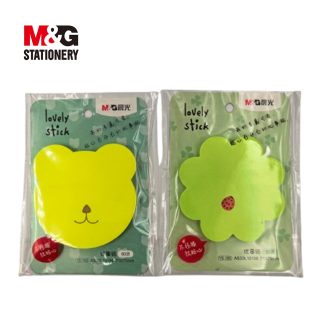 Post it fluorescents 3*3 60files
Ar 2,570
-
 Machine à calculer 120 étapes
Ar 30,800
-
 Colle baton super fort
Plage de prix : Ar 2,040 à Ar 6,120
Before you touch a single spin on the new Nolimit City slots, there is a question worth answering honestly: how do you actually react when a bonus scatter lands two symbols short of a trigger? That reaction, more than any RTP figure, tells you whether a release suits your temperament. Volatility tolerance is not bravado about big max wins. It is the measurable gap between the stake you can lose without flinching and the stake you need to keep a session enjoyable when the base game goes quiet for two hundred spins.
The thesis here is simple enough to test in an evening. Treat volatility tolerance as a checklist, not a feeling. Work through the published numbers first, then your own behaviour, and you get a personal profile that maps cleanly onto the Nolimit City slots 2026 calendar. The provider’s output makes this exercise unusually worthwhile. Nolimit City slots pair long base-game barren stretches with complex bonus purchase menus, and the six releases between June and September 2026 average an RTP of 96.04%. Those figures sit alongside wildly different volatility ratings, from AFK Airport Security, rated high rather than very high, up to Duck Hunters 2 with the highest max win at 40,000x. One checklist cannot cover both ends of that spread, which is why the assessment has to start with you.
The near-miss question sits at the centre of it. A high variance maths model is engineered to produce features that almost trigger: four scatters on a five-scatter bonus, a Nolimit Bonus wheel that stops one segment short, a multiplier that expires the spin before a connection. If those moments sharpen your focus, you can handle variance. If they make you raise stakes to chase the outcome, your tolerance is lower than your bankroll suggests, and the checklist in the sections that follow will show it in black and white.
Why volatility tolerance matters before you open a new Nolimit City slot
Volatility tolerance is not a personality trait you either have or lack. It is a working limit, and it can be measured before you spend a penny on a slot. That matters more with Nolimit City than with most studios, because the gap between a comfortable session and a demoralising one is unusually wide. Get the assessment right and the maths model becomes entertainment. Get it wrong and a 96% RTP game can still empty an account in forty minutes.
Start with what the studio actually builds. Nolimit City slots pair long base-game barren stretches with complex bonus purchase menus. A typical release can run hundreds of spins with nothing but small returns, then collapse three features into a single burst. The published RTP of a slot is a long-run average across millions of spins, not a promise for your evening. Two players on the same game, same stake, same hour can finish 300x apart. Volatility is the variable that explains the difference, and your tolerance is the variable that decides whether you enjoy the ride or resent it.
The 2026 release schedule makes the point sharply. Nolimit City released six slots between June and September 2026, and the spread of maths across them is wide. Duck Hunters 2 has the highest max win at 40,000x. AFK Airport Security is rated high rather than very high volatility. Gator Hunters 2 uses pay-anywhere mechanics, Ding Dong Death has a 729-ways structure and 14,280x max win, Outsourced 2 offers 625 ways and an 11,111x cap, and Soaked by Seamen features 225 ways and a 30,000x ceiling. The six 2026 releases average an RTP of 96.04%. Identical headline return, six very different experiences. A player who bounces off a 40,000x game has not failed at slots; they have simply picked the wrong model for their bankroll.
Hence the checklist. Rather than relying on gut feel after a bad session, score yourself against fixed questions before you open anything new. The full self-assessment runs across the following sections, but the shape is simple:
- Bankroll and stake sizing. A fixed cash limit, a stake expressed as a fraction of that limit, and a planned session length in spins.
- Session length versus feature frequency. How many dead spins you can absorb before the bonus lands, measured against the game’s variance rating.
- Near-miss reaction. What you actually do when a feature almost triggers, which is the exact experience high variance Nolimit City releases are built to produce.
- Demo validation. Free play on the studio’s demos to test each answer without risking cash.
Two numbers anchor the whole exercise. First, the volatility rating from Nolimit City reviews, which tells you roughly how often you will sit through dry spells. Second, your own stake-to-balance ratio. A useful starting rule: no single spin above 0.5% of your session bankroll on a very high volatility game, and no session planned for longer than the number of spins it typically takes to trigger a feature. If those two figures do not fit together, the slot is wrong for you regardless of how good the maximum win potential looks.
The site provides free demos and a mobile app for every slot, which makes this cheap to test. Run the checklist on paper first, then confirm it in demo mode. Treat the result as a filter, not a verdict: it tells you which of the new Nolimit City slots belong in your rotation and which you should admire from a distance. The sections that follow turn that filter into a scored assessment.
Reading the numbers: RTP, max win potential and variance ratings in Nolimit City reviews
Nolimit City reviews are useful only if you read them the way a risk analyst would, not the way a shopper reads a spec sheet. Three numbers do most of the work: return to player percentage, maximum win potential and the slot volatility rating. Each answers a different question, and confusing them is how players end up in a session they cannot stomach.
Start with RTP, but treat it as a long-run average rather than a promise. The six 2026 releases average an RTP of 96.04%, which sits comfortably in the normal band for the provider. What matters more is the spread. Some titles publish a base figure and then apply lower RTP settings for bonus buys or certain jurisdictions, so check the paytable inside the game rather than trusting a third-party number. A 96% game and a 94% game feel identical over 200 spins; the difference only shows up across tens of thousands of rounds, which is precisely why RTP should never be your tolerance test on its own.
Maximum win potential is the number players latch onto, and it is the one most often misread. A 40,000x cap, as seen in Duck Hunters 2, tells you the maths model permits extreme outcomes, not that they are likely. The cap is a ceiling, and reaching it usually requires a specific bonus configuration plus luck. Use the multiplier as a volatility signal: caps above 20,000x almost always sit on a high variance maths model, while a 5,000x to 11,111x range is more forgiving. Compare Outsourced 2 at 625 ways and an 11,111x cap with Soaked by Seamen at 225 ways and a 30,000x ceiling, and you can see that ways count and win cap pull in different directions.
Turning published figures into personal tolerance thresholds
The practical step is to convert each figure into a rule you can act on before you deposit. The list below is the translation layer I use when scanning a new release.
- RTP under 96%: treat it as a costlier session and shorten your planned spin count by roughly a fifth.
- Max win above 25,000x: assume long base-game barren stretches and budget for at least 300 spins without a feature.
- Volatility rated high rather than very high: a green light for moderate stakes, as with AFK Airport Security.
- Very high volatility with cluster pays or pay-anywhere mechanics: drop your stake to half your normal level until you have seen the bonus frequency for yourself.
- Bonus purchase menu present: decide your Nolimit Bonus ceiling before you start, because the menu is designed to be tempting mid-session.
One more habit worth building: ignore the star rating in a review and read the variance paragraph instead. Ratings vary between affiliates, but the description of how often features land and how the base game behaves is harder to fake. If a review says the bonus purchase menu carries most of the value, that is a warning that the base game will feel thin. If it says the 729-ways structure in Ding Dong Death keeps small wins ticking over, that is a different session shape entirely. Match the description to your own patience, not to the headline multiplier.
Checklist part one: bankroll, stake sizing and session length
Volatility tolerance starts as arithmetic before it becomes psychology. Three measurable inputs do most of the work: how much you can afford to lose in a session, what percentage of that you stake per spin, and how long you intend to sit there. Get these wrong and no amount of self-knowledge will save the session. Get them right and a high variance maths model becomes survivable rather than punishing.
Work through the following checks in order. Write your answers down. A number you have committed to on paper is harder to renegotiate at 1am than one you are holding loosely in your head.
- Bankroll limit. Set a hard figure you can lose without it affecting rent, bills or mood for the rest of the week. Treat it as spent the moment it leaves your account. For session purposes, divide it into four to six chunks. A single session should use one chunk, not the whole fund.
- Stake-to-balance ratio. Divide your session chunk by your planned stake. If you have 200 and spin at 1, you have 200 spins. At 2, you have 100. High variance releases commonly produce base-game barren stretches of 150 to 300 spins, so anything under roughly 150 spins of cover means a normal dry patch will end your session before a bonus lands. A workable floor is 200 spins of cover; 300 or more is comfortable for very high volatility.
- Session length. Estimate your spins per hour realistically. On desktop, manual spinning runs around 400 to 600 spins an hour; turbo and autoplay push higher. Multiply that by your stake and you have your hourly burn rate. If the figure makes you wince, the stake is too high, not the game too harsh.
- Loss limit and stop point. Decide in advance the point at which you walk, typically 50 to 70 per cent of the session chunk. Pair it with a win stop if you know that giving back a peak triggers chasing.
- Bonus purchase budget. If you plan to use the bonus purchase menu, cost it separately. A single Nolimit Bonus buy can equal 50 to 100 base-game spins at the same stake. Cap the number of buys per session before you start, not after two failed attempts.
- Time boundary. Set a clock. High variance sessions distort time, and a two-hour plan that becomes five is a bankroll decision made by fatigue rather than judgement.
Here is how the numbers translate into a tolerance verdict. If a 300-spin dry run at your chosen stake would wipe out more than half your session chunk, you are either overstaked or underfunded for that volatility rating. The fix is one of two moves: drop the stake, or pick a lower variance title. That is the entire point of reading volatility ratings in Nolimit City reviews, such as those you can find via https://nolimit-city-casino.com/, before you play rather than after.
| Session chunk | Stake | Spins of cover | Verdict for high variance |
|---|---|---|---|
| 100 | 1.00 | 100 | Too thin, expect early busts |
| 200 | 1.00 | 200 | Minimum workable |
| 300 | 1.00 | 300 | Comfortable |
| 300 | 2.00 | 150 | Marginal, dry patches bite |
One more check: your cover should survive the published maximum win potential being irrelevant to you. If the only outcome that would make the session feel worthwhile is the 40,000x ceiling, your stake is calibrated to fantasy rather than tolerance. Sound slot bankroll management assumes the top prize does not arrive and asks whether the session still holds together. If the answer is no, the next section on near-miss reactions will explain why that matters more than you think.
Checklist part two: your reaction to near-misses and narrowly failed features
Why the near-miss question belongs in the checklist
Objective measures stop short of the real test. A player can pass every bankroll and stake sizing check and still make poor decisions the moment a bonus teases and fails. Near-misses are not an accident of design; they are the core product. Nolimit City slots pair long base-game barren stretches with complex bonus purchase menus, and the tension sits in the gap between a feature almost landing and the balance quietly draining.
So the second checklist block asks one blunt question: what did you actually do after the last narrowly failed feature? Not how you felt. What you did. The answer predicts your tolerance better than any volatility rating.
The near-miss reaction audit: five questions, honest answers
Run this after a session, ideally the same evening. Score each 0 to 2, where 0 is « no effect », 1 is « mild pull », 2 is « changed my behaviour ».
- After a scatter landed one short, did you raise your stake to « chase the setup »?
- Did you open the bonus purchase menu after a failed trigger and hover over the buy button?
- Did you extend a planned 30-minute session because a feature felt « due »?
- Did you switch to a higher-variance title mid-session to recover a near-miss loss?
- Did you re-deposit within an hour of a narrowly failed Nolimit Bonus round?
A total of 0 to 3 suggests your tolerance is intact. A score of 4 to 6 means your emotional response is outrunning your bankroll plan. A score of 7 or more says the maths model is choosing your stakes, not you.
Matching your score to a play pattern that survives the maths
The table below converts the audit into practice. Use it alongside the slots you are considering, and cross-check with a slot comparison tool before committing real money. Slot bankroll management only works if the reaction layer is handled first.
| Audit score | What it means | Practical adjustment |
|---|---|---|
| 0 to 3 | Near-misses register but do not steer decisions | Keep current stakes; cap bonus buys at a fixed percentage of session budget |
| 4 to 6 | Mild chasing after failed triggers | Set a hard stop after two failed feature attempts; no stake increases mid-session |
| 7 to 9 | Emotional response drives stake and session length | Move to demo play only until two clean sessions in a row; avoid bonus purchase menus entirely |
| 10 | Near-misses trigger re-deposits | Stop. Use a deposit limit at the operator level and return to slot demo play before any further real-money play |
One detail worth knowing: near-miss frequency scales with the maths model. A title like Duck Hunters 2, with the highest max win at 40,000x, will produce more visible near-misses per hour than a mid-variance release. That is not a flaw. It is the high variance maths model doing its job, and it is exactly why this checklist block matters before you open anything new.
Testing safely with Nolimit City demos and setting your 2026 play rules
A checklist you never test is just a list of good intentions. The final step is to validate your answers in a risk-free environment, then convert the results into rules you can actually follow when real money is on the line.
Nolimit City demos are the right tool for this. The site provides free demos and a mobile app for every slot, so you can run the same game, the same stake ratio and the same session length as your live plan without spending a penny. Treat the demo balance as if it were your real bankroll: same starting figure, same bet size, same stop-loss. If your assessed bankroll is 200 GBP and you play at 0.50 GBP per spin, do exactly that in the demo. Changing the parameters invalidates the test.
Run the test across three or four titles rather than one. A useful spread for 2026:
- Duck Hunters 2 – has the highest max win at 40,000x among the six 2026 releases, so it is the sharpest stress test for near-miss tolerance.
- AFK Airport Security – is rated high rather than very high volatility, a sensible baseline to compare against the extremes.
- Ding Dong Death – has a 729-ways structure and a 14,280x max win, useful for judging how you cope with a mid-range cap.
- Soaked by Seamen – features 225 ways and a 30,000x ceiling, a different rhythm from the ways-heavy titles.
Log each session against your checklist answers. Note how long the base game stayed barren, whether you were tempted to raise stakes after a near-miss, and whether you closed the demo at your planned stop point or kept going. Two or three demo sessions per title is usually enough to confirm or contradict your self-assessment. If your stated tolerance was « medium » but you abandoned the demo after 150 spins of dead spins, believe the behaviour, not the label.
Then write your 2026 rules. Keep them short and numeric:
- Maximum stake per spin as a percentage of session bankroll (1 to 2 per cent is a common ceiling for very high variance titles).
- A hard session length in minutes, with a check-in alarm at the halfway point.
- A stop-loss figure and a win-stop figure, both decided before the first spin.
- A rule on bonus purchase menus: whether you use the Nolimit Bonus features at all, and if so, what percentage of bankroll a single purchase may consume.
- A rule on stake increases: none after a near-miss, none after a losing streak.
Cross-check the maths before you commit. The six 2026 releases average an RTP of 96.04%, which means the house edge is roughly 4% per spin over the long run; no rule changes that, but your rules control how much exposure you give it. Use the slot comparison tool to confirm the published return to player percentage on the exact variant you plan to play, since some operators run lower-RTP configurations. If a slot promo code is part of your plan, read the wagering terms before you count the bonus as bankroll.
Finally, revisit the rules after every ten live sessions. Slot release dates move quickly and new Nolimit City slots will keep arriving through 2026, so a rule set that holds for Duck Hunters 2 should be re-tested in the demo before you apply it to the next launch. Tolerance drifts; the checklist should drift with it.
Run the checklist once on paper before you touch a real balance. Score each of the four blocks from 0 to 3, add them up, and write the total next to the date. Anything at or below 6 means the release in front of you is probably too sharp for your current bankroll; 7 to 9 says proceed but cap stakes at 0.5% of balance and stop after 300 spins; 10 or above clears you for higher stakes, though the near-miss block should still override the total if you scored 1 or 0 there. Repeat the exercise after every session for two weeks and compare the scores. A drifting total tells you more about your tolerance than any single session ever will.
Then test the verdict where it costs nothing. Open the demo of the slot you are considering, set the stake you would actually use, and play 200 spins with the bonus purchase menu closed. If you find yourself hovering over the buy button before spin 100, your emotional score was optimistic and the real-money stake needs to come down. Log the result in the same place you keep your scores, note the release date, and set a reminder for the next Nolimit City slots 2026 launch so the checklist runs before the hype does. Two further habits keep the process honest: check the slot comparison tool for the current RTP figure rather than a cached review, and confirm any slot promo code terms before you claim, because wagering requirements quietly redraw your bankroll limits. If a session ends with you chasing a feature that nearly landed, stop for the day and re-score the near-miss block. The number you write down is the one that counts.