Categories
 Accessoires & Beaux Arts
 Beaux Arts
 Bureautique
 Outils d'écritures
 Papeterie
MEILLEURES VENTES
-
 Stylo à bille 0.7mm Noir
Ar 2,090
-
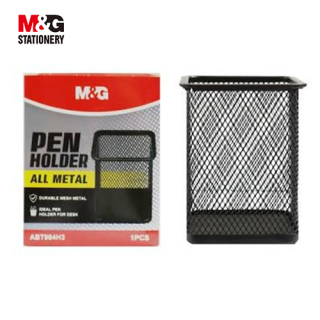 Pot a stylo carre metal 70 x 110 mm
Ar 5,910
-
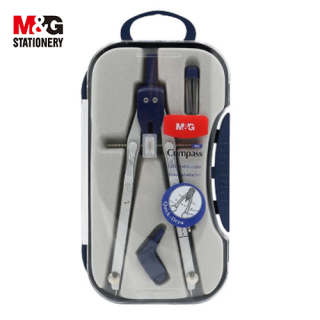 Compas de precision metal
Ar 21,970
-
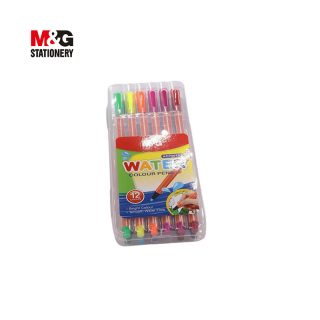 Feutres 12 cls/24 cls
Plage de prix : Ar 8,390 à Ar 16,760
-
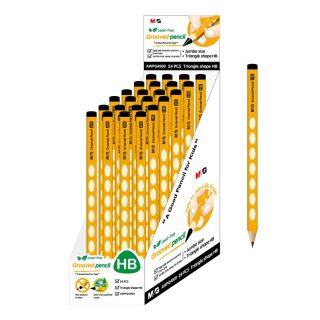 Crayon Jumbo triangle jaune 2B
Ar 1,380
Most slot players compare games on a single line: the RTP percentage. That number gets treated like a guarantee, a fixed edge baked into the machine. It is not. RTP is a long-run average, and volatility decides how violently the actual results swing around that average. Pair a high RTP with medium-high volatility and you get a wider confidence interval than a lower RTP paired with low volatility. That single interaction rewrites how you should read every comparison table you encounter, and it is the reason short demo sessions routinely mislead people about which games actually pay better.
The Multiplicative Trap: Why RTP and Volatility Cannot Be Read Separately
Take 3 Crowns: Coin Hunt from Evoplay. It carries a 96.31% RTP and a max win of 7,324x. Those two figures together tell you something a bare RTP number never could: the payout distribution has a long right tail, which means many spins return nothing meaningful and a small number of spins return enormous amounts. That is the signature of medium-high volatility. Now compare it to a hypothetical 96% low-volatility slot. On paper, 3 Crowns: Coin Hunt leads on RTP and max win. In practice, over 1,000 spins, the high-RTP game produces a wider confidence interval around its expected return than the low-RTP game does. The 0.31 percentage point RTP advantage is real but small; the variance difference is large. Judged over a short demo, the « better » game can easily look worse.
This is the multiplicative trap. RTP sets the centre of the distribution. Volatility sets the spread. When you multiply the two effects across a finite sample, the spread dominates. A 96.5% RTP game with medium-high volatility can lose you more over 1,000 spins than a 96% RTP game with low volatility, even though the first game is mathematically more generous in the limit. The limit is not where you play. You play inside the sample, and the sample is noisy.
Run the rough arithmetic. Over 1,000 spins at 1 credit per spin, a 96.31% RTP game expects to return 963 credits. But with medium-high volatility, a two-standard-deviation band on that result might span hundreds of credits in either direction. A low-volatility 96% game over the same 1,000 spins expects 960 credits with a band perhaps a third as wide. The two expected values sit 3 credits apart. The bands overlap almost entirely. Anyone claiming a 1,000-spin demo « proved » one game pays better than the other is reading noise as signal.
Reading the Metrics That Actually Move the Needle
If RTP alone is insufficient, what belongs in a serious comparison? Start with the pairing: RTP plus volatility, always quoted together. Then max win, because it quantifies the tail. 3 Adventures of Alice Hold & Win from Hacksaw Gaming lists a 96.26% RTP and a 2,500x max win. That max win figure is far lower than the 7,324x on 3 Crowns: Coin Hunt, which implies a different volatility profile and a different hit frequency. Two games with nearly identical RTP (96.26% versus 96.31%) can behave nothing alike in a session. The max win and the provider’s stated volatility are what separate them.
Hit frequency, wagering, and the numbers around the numbers
Hit frequency is the quiet metric. A game that returns something on 30% of spins feels completely different from one that returns something on 20%, even at identical RTP, because the losing streaks between wins run to different lengths. Providers do not always publish it, but you can infer a lot from a free demo. Play 200 spins and count the dry runs. That empirical feel is worth more than any marketing claim.
Then there is the money around the game. Casino bonus offers carry wagering requirements, and those requirements interact with volatility in ways players rarely model. A 35x wagering requirement on a bonus is far easier to clear on a low-volatility slot, where results cluster near the mean, than on a medium-high volatility slot, where a cold streak can stall your balance before the requirement is met. The RTP of the game you choose to clear a bonus matters less than the variance you expose your bonus balance to. Free spins offers have the same problem: a free spins package on a high-variance game is a lottery ticket, not a steady grind.
Provider reputation earns a place too. Evoplay and Hacksaw Gaming both publish certified RTP figures, and independent testing houses verify them, but the published RTP is a configuration default. Some operators run lower RTP variants of the same game, so the number on the paytable is the one that counts, not the number on the review site. Always check the in-game info panel before you commit real money. A slot review that quotes RTP without noting the variant risk is doing half the job.
Testing Volatility in a Demo Without Fooling Yourself
The adventure slots demo is the right tool, used correctly. Sites like demoslotsguide.com offer free slot demos across a wide slot collection, and the adventure theme slots section currently contains 2 games released in 2026, including the two titles above. Use the free adventure themed slots demo to feel the rhythm of a game before risking anything. But understand what a demo can and cannot tell you. It can show you the hit frequency, the bonus trigger rate, and the visual pacing. It cannot tell you which of two high-RTP games is « better » over a few hundred spins, because the confidence intervals overlap.
Here is a procedure that actually works. Pick your comparison pair. Run 500 spins on each in the adventure slot games demo no download mode, logging your balance every 50 spins. Plot the two balance curves against each other. If one game is far ahead, ask whether the gap exceeds what variance alone could produce. With medium-high volatility, it usually does not. A 500-spin sample at that volatility is simply too small to separate a 96.31% game from a 96.26% game. The honest conclusion from most short demos is « these two games are statistically indistinguishable on RTP; choose based on max win and feel. »
For a genuine comparison, you need tens of thousands of spins, and that is what the long-run RTP figure already encodes. The demo’s job is not to re-derive RTP. Its job is to let you evaluate the journey-driven slots experience: does the bonus round land often enough to keep you engaged, does the base game feel dead between features, does the max win feel reachable or theoretical. Those are qualitative questions a demo answers well. Quantitative payout questions it answers poorly.
One more safeguard. When you move from demo to real play, check the operator. VegasNova, Cosmobet, and Rolletto all carry slot collections with these titles, and player feedback on Trustpilot gives you a read on withdrawal reliability before you deposit. In Canada, provincial rules vary, so confirm the operator is licensed for your province. A great RTP is worthless if the withdrawal never arrives. The slot rating that matters most is the one that combines game maths with operator trust.
Treat RTP as the centre of the target and volatility as the size of the target. A high-RTP, medium-high-volatility game like 3 Crowns: Coin Hunt has a large target: generous in the long run, wild in the short run. A lower-RTP, low-volatility game has a small target: stingier in the long run, predictable spin to spin. Neither is universally better. Match the target to your bankroll and your tolerance for dry spells, verify the RTP variant in the info panel, and use demos to judge feel rather than to crown a payout winner. That approach will not hand you a magic number, but it will stop you from mistaking variance for edge.